Then · Now · Next

A long journey, in one drape.

Its story is not a straight line. It is a living tradition, shaped by changing fabrics, regional craft, ceremonies and the way people choose to dress.

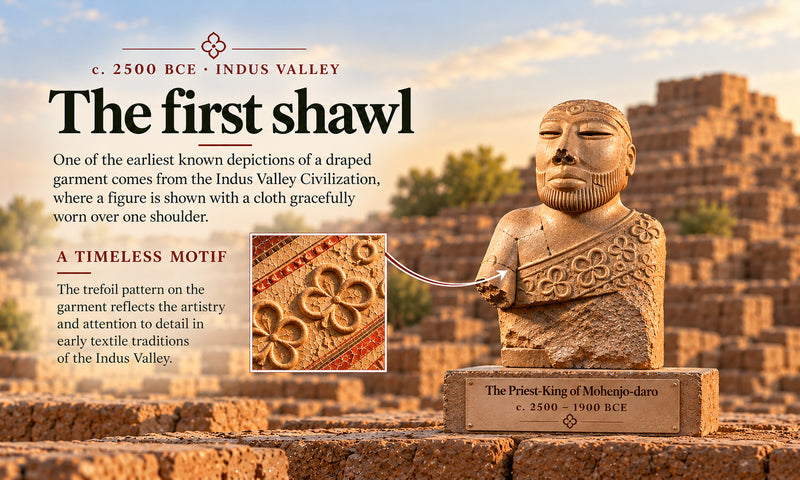
c. 2500 BCE · Indus Valley

The first shawl

A sculpture of an Indus Valley priest-king shows a shawl-like cloth over the left shoulder. It is the earliest image we have of what the dupatta would become. People wore locally grown cotton, and an unstitched cloth was enough for warmth and modesty.
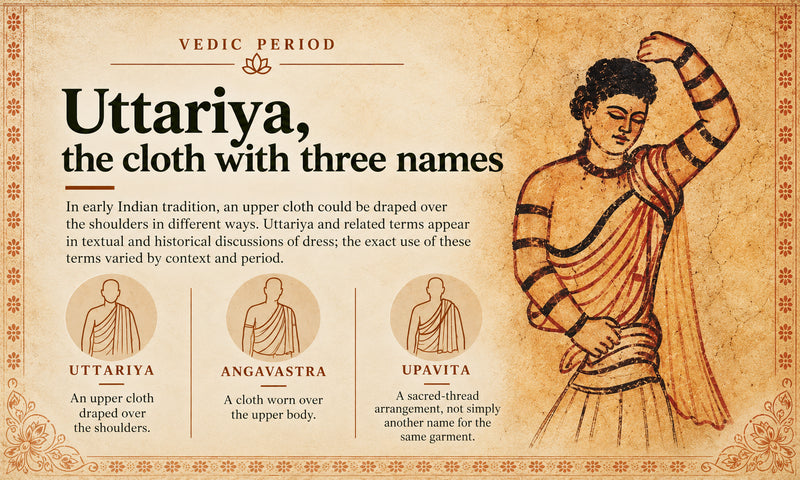
Vedic period

Uttariya, the cloth with three names

Early Sanskrit writing names the shoulder cloth uttariya, the cloak avagunthana, and the face veil mukha-pata. Covering the head at a place of worship, and in front of elders, became a way to show respect.

Mauryan and Gupta art

Cloth carved in stone

Sculpture and painting from these periods keep showing layered, draped cloth. By the 6th century BCE, texts already describe a three-part outfit: a lower cloth, a chest band and the uttariya for the shoulders or head.

Mughal era

From cloth to art

Persian taste met Indian craft. Fine muslin from Bengal, silk from Varanasi and chiffon from the Deccan were worn at court, worked with zardozi and gota patti. The salwar kameez is believed to date from this era, and the dupatta became a mark of status.

Punjab and Rajasthan

Cloth that marks a life

In Punjab, women embroidered phulkari for their own families. In Rajasthan, a yellow tie-dyed piliya is worn by a young mother after a first birth. Here the dupatta became a record of births, weddings and wishes.

Today · New Delhi

Still being stitched

Colonial-era trade brought European fabrics and ideas into the mix, and the dupatta kept adapting. It is worn at weddings and festivals, and with jeans. Stitch Theory works from New Delhi to carry these crafts into everyday dupattas.